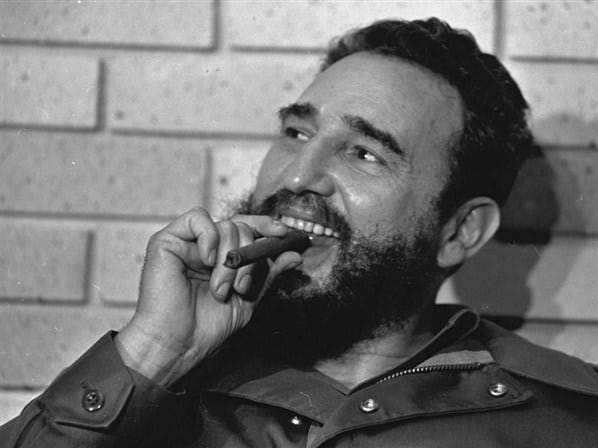
Smoking looks cool. You consume fire and exhale fumes; that’s just badass. Smoking can make characters memorable, like the caterpillar from Alice in Wonderland. It can even make real people memorable, like Fidel Castro and his iconic cigar. Smoking can help us get through the stress of work, and it can help us relax when we are off. We all know smoking is bad for us, so how can something be both good and bad?
Subjects can only be good or bad in relation to other things. For something to look cool, there must be mundane things to compare it to. For something to be bad for us, there must be things that are good for us. No subject can be understood without looking at what intersects with that subject.
Images leave an impact on how we remember things. Fidel Castro is thought of as a cigar smoker even though he quit smoking in 1985 and never smoked while I was alive. When I hear the word Castro, I think of that picture where he’s holding a cigar and laughing.
Our brains aren’t computers that save memories like files. We remember key notes, not entire pages. Most people just read news headlines and skip the article. You can manipulate people’s interpretation of events by controlling the language or imagery associated with that event.
We all understand why performers don’t smoke cigarettes in movies anymore: because it’s a bad influence on people, especially kids. Depicting smoking in media can affect society. That’s why Castro quit smoking; he wanted to set a good example for the Cuban people. But this societal control isn’t always used benevolently; it’s often used to obscure historical truths.
Every mainstream media outlet refers to the 1962 nuclear missile crisis as the “Cuban missile crisis.” But the crisis did not start with Cuba; it started when the United States government put Jupiter nuclear missiles in Turkey, next door to the Soviet Union. Placing such destructive weapons so close to their enemy was a clear escalation of Cold War tension. But history books and bourgeois media depict their enemies as the bad guys. So instead of calling it the Turkish or Jupiter missile crisis, they place their enemy’s name in front to make us associate Cuba with nuclear war.
The entire Cold War was taught to us with this bias. The moon landing sounds like a major achievement, and history books make it seem like the space race ended in 1969. But the Soviets had a probe on Venus a year later. Reaching another planet is a far greater achievement than getting to the moon.
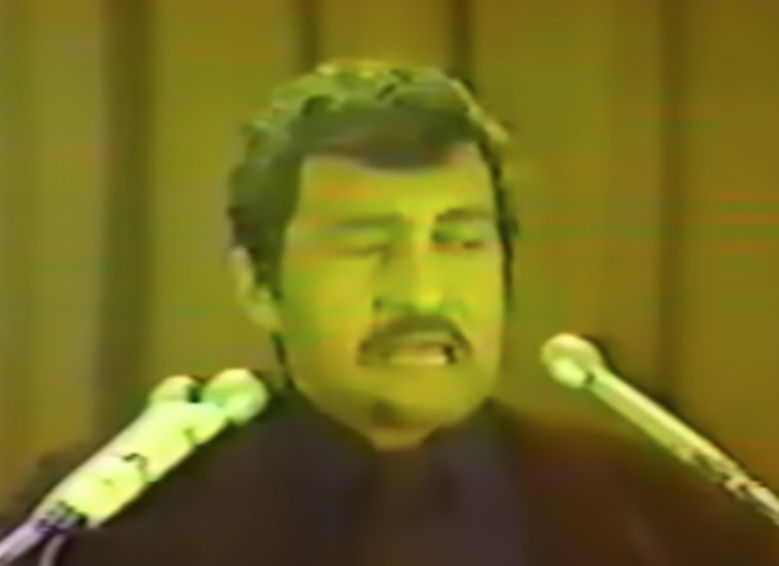
There was no nuclear arms race. If it was a race the Soviets would have escalated tensions, but just like in 1962, it was the USA escalating things. Most nuclear weapons were developed by the US, with the Soviets reluctantly catching up. The atom bomb, hydrogen bomb, and MIRV technology are just a few weapons pioneered by the USA that the Soviets would develop years later. Michael Parenti put it best in his famous Yellow Parenti lecture: “There was no nuclear arms race; it was a nuclear arms chase.”
When we only look at a subject by itself, we can only study part of that subject. Observing history as a series of isolated events like the ‘Cuban missile crisis’ won’t show us the full picture. Just fixating on the moon landing won’t give us an understanding of the space race.
Our ideological outlook comes from the loose patchwork of things we’ve learned and how we feel about them; as a result, we often see things from an overly simplistic point of view. That simplistic worldview then reinforces those same ideological interpretations. This feedback loop is a naturally occurring phenomenon. We think of Fidel Castro as a cigar smoker, so we just assume it’s that simple.
That oversimplification is why it seems counterintuitive to see things as both good and bad. Most subjects are made up of multiple parts. Smoke—for example—is not simply gas; it is solid particles dispersed with a gas. Rarely is anything simply all one thing. Smoking cigarettes is bad for your health, but smoking weed gets my creative juices flowing and helps with my autoimmune disease.
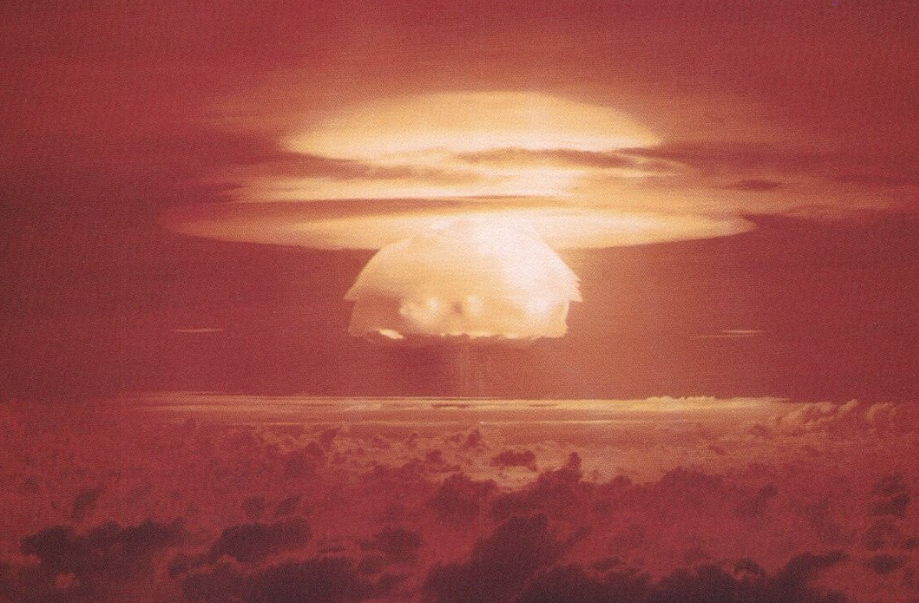
Smoke sends signals to our brains. Colored smoke can signal information to others, like the Vatican using white smoke to indicate a new pope has been chosen. Or smoke can take a recognizable shape, like the mushroom clouds left by nuclear detonations. Imagery affects how we remember things, and those memories affect how we feel about things now.
Having a scientific way to interpret and interact with media is essential. That’s why dialectical materialism is so important to learn and implement. Dialectical materialism is needed to understand every aspect of life, not just the big things like capitalism and revolution. Applying dialectics is about dissecting what we’ve learned to make sure we understand the full picture. Once we understand how everything is connected, we can see that Cuba and every socialist country have been the victims of a massive smear campaign that’s over a century old.
Ideology is used as a smokescreen to obscure our understanding of the world around us. We always need to take conscious control over our ideological outlook. When media tells us misinformation, we must always correct it. The revolution doesn’t start with guerilla warfare; it starts by correcting those lies. One of the most revolutionary things we can do right now is speak truth to power.
Whenever we see someone speaking truth where the media lies we can see the revolution taking shape. Each and every one of us can begin to take our place in the revolution, and it starts with loudly declaring what is really happening.




Leave a Comment
You must be logged in to post a comment.